- How to Pick the Right Gantry Crane
-
Release Time:2025-12-18 17:19:45Share:
How to Pick the Right Gantry Crane: A Complete Guide from Parameters to Industry Applications
Gantry cranes – including heavy-duty models for outdoor and long-span applications – are used as core material handling equipment across industries. From port container yards to steel mills, logistics warehouses to construction sites, the right gantry crane can really improve how well things are done. On the other hand, if you don't choose the right one, you might end up with safety problems, breakdowns and wasted money.
As a global leader with 30 years of gantry crane manufacturing know-how, Henan Mining Services operates in over 150 countries and has developed scientific selection methodologies tailored to diverse industrial needs. This guide will tell you all about the main things to think about, the special ways the industry uses gantry cranes, how to pick the right one for the job, and the common mistakes to avoid. Whether you need a compact indoor crane or a large outdoor one, this guide will help you choose the perfect one.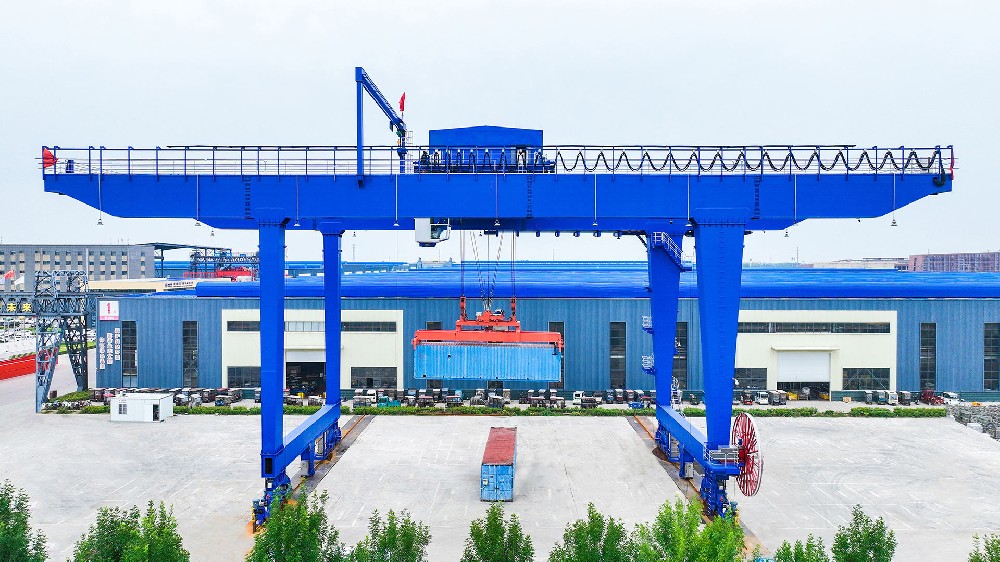
The main idea: How to tell the difference between Gantry Cranes and Portal Cranes
Before we get into the selection process, it's important to understand the differences between these two types of cranes (this is also essential for SEO optimisation and making sure the users understand what's going on):
Gantry Crane: A bridge crane is basically a crane that's supported by two columns and can be moved around on rails or tyres. This covers light/medium-duty models (1-50 tons) used in workshops and warehouses.
Gantry Crane: This is for heavy-duty, long-span gantry cranes (usually over 50 tons and 20 meters wide), which are designed for outdoor environments like ports, shipyards and large construction sites.
So basically, all gantry cranes are gantry cranes, but not all gantry cranes are really gantry cranes. When you're picking one, you've got to think about how much it can lift, how long the span is, and what the environment is like.
So, the first thing you need to do is define the core requirements. This is the foundation for the selection process. Load Characteristics: So, the first thing we need to do is work out the maximum lifting capacity and how the equipment should be set up.
Maximum Lifting Capacity: So, work out the heaviest load you've got (including the weight of the equipment you're going to lift) and add a 10-20% safety factor. For example:
For 20-ton steel coils, go for a 25-ton gantry crane.
For a 40-foot container (35 tons), you'll need a 45-ton gantry crane.
Load Type:
Just so you know, we've got bulk materials like coal and grain. They've got hydraulic grab buckets.
Long workpieces (I-beams, pipes): Go for double-hook or C-hook gantry cranes.
Materials that can cause corrosion, ignition or explosion (chemicals): You can choose stainless steel or explosion-proof gantry cranes.
Just so you know, there are a few special requirements. For precision lifting (e.g. electronic components), you need micro-speed control, and for high-temperature environments (steel mills), you need heat-resistant motors.
2. Installation Environment: Protective customisation and structural design
Spatial dimensions:
Span: So, to work out the right size gantry crane, you need to measure the distance between two columns. For example, if you've got a 30-metre-wide workshop, you'd want a 28-metre-span gantry crane, leaving 1 metre of operating space on each side.
Lifting height: Make sure you've got enough space for stacking (e.g., for a three-tier container stacking, the lifting height needs to be ≥12 meters).
Ground Conditions:
Hardened Concrete Surface: This wheeled gantry crane is great for moving around easily, making it perfect for all sorts of different jobs.
Fixed Outdoor Site: Rail-mounted gantry crane (more stable for big, tough jobs).
Rough Terrain (Construction Sites): This crawler-mounted gantry crane is great for uneven surfaces.
Protecting the environment is important to us.
Outdoor/Coastal Areas: Our gantry cranes are windproof (they have 10-level wind resistance) and rustproof (they have IP65 protection).
Dust-prone Workshops (Foundries): Dust-proof electrical cabinets and sealed bearings.
Explosive Zones (Chemical Plants): We've got ATEX/IECEx-certified explosion-proof gantry cranes here.
3. Work Intensity: Job Type and Efficiency Matching
Job Classification (as per GB/T 3811-2008):
Light Duty (A1-A3): If you're only using it sometimes (like in warehouses, for under five hours a day), go for the economy gantry cranes.
Medium Duty (A4-A5): Every day, the machining shops are open for 5 to 10 hours.
The standard gantry cranes are used.
Heavy Duty (A6-A8): It's always on (ports, 24/7) and it's got a high-intensity gantry crane with reinforced motors.
How fast it operates:
Normal situations: The speed of the hoist is between 5 and 10 metres per minute.
The logistics hubs need a 15-20 m/min variable-frequency gantry crane.
Step 2: Interpreting the core parameters to avoid "parameter pitfalls" The most important thing is the lifting capacity and span.
Lifting capacity: Don't get "rated lifting capacity" and "maximum lifting capacity" mixed up (some manufacturers inflate the latter). Henan Mining gantry cranes have a rated load deviation of ≤±2%, which is in line with ISO 9001 standards.
Span Range: We've got standard spans of 5m, 10m, 20m and 30m, and we can also do custom spans for sites that need them. For spans of 30 metres or more, go for double-girder gantry cranes (they're more stable than the single-girder ones).
2. Lifting Height and Duty Class
Lifting Height: Just so you know, the distance from the ground to the hook tip is about 1-2 metres. Make sure you leave a bit extra for stacking or avoiding obstacles.
Duty Class: If you don't, it'll wear out quicker. For example: If you're using an A5-rated gantry crane for 24/7 port operations, you'll run the motors ragged in six months.
3. Drive and Control Modes
Drive Mode: The good and the bad of this mode, and what it's best used for.
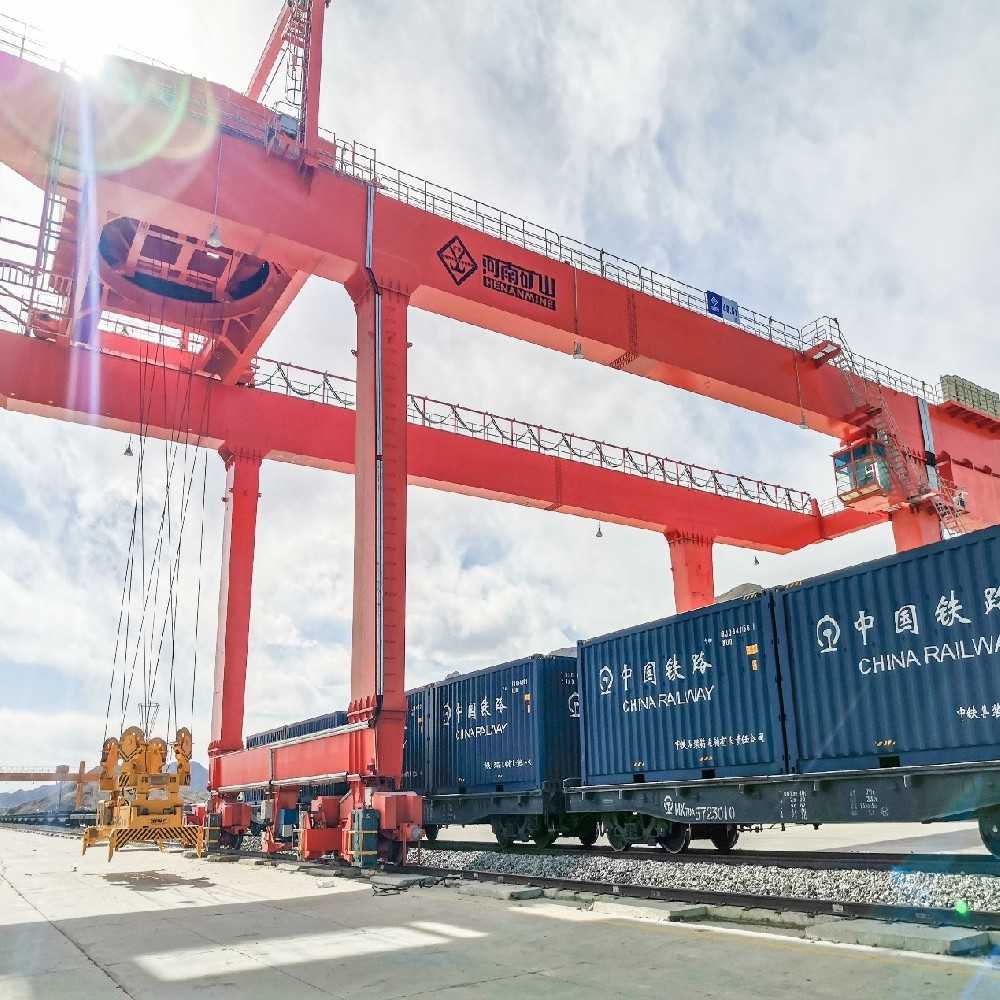
Rail-mounted:
- Stable, even when carrying a heavy load
- Fixed route
- Ports, steel mills
Tire-mounted:
- Can move around easily
- Lower load capacity (≤50 tons)
- Warehouses, construction sites
Crawler-mounted:
- Can go in rough terrain
- Slower speed
- Outdoor construction, mines
Control Modes: We've got ground remote control (small cranes), cab operation (large gantry cranes) and intelligent automation (unmanned container yards).
Step 3: Industry-Specific Applications
Picking the Right Model for Your Field
Gantry crane selection depends a lot on how you're going to use it. Here are some custom solutions for key industries, with long-tail keywords like "port gantry crane," "steel mill gantry crane," and "chemical explosion-proof gantry crane" included:
1. Ports and Container Terminals: Heavy-duty gantry cranes
What you need: It's got a high tonnage capacity, high efficiency and wind resistance.
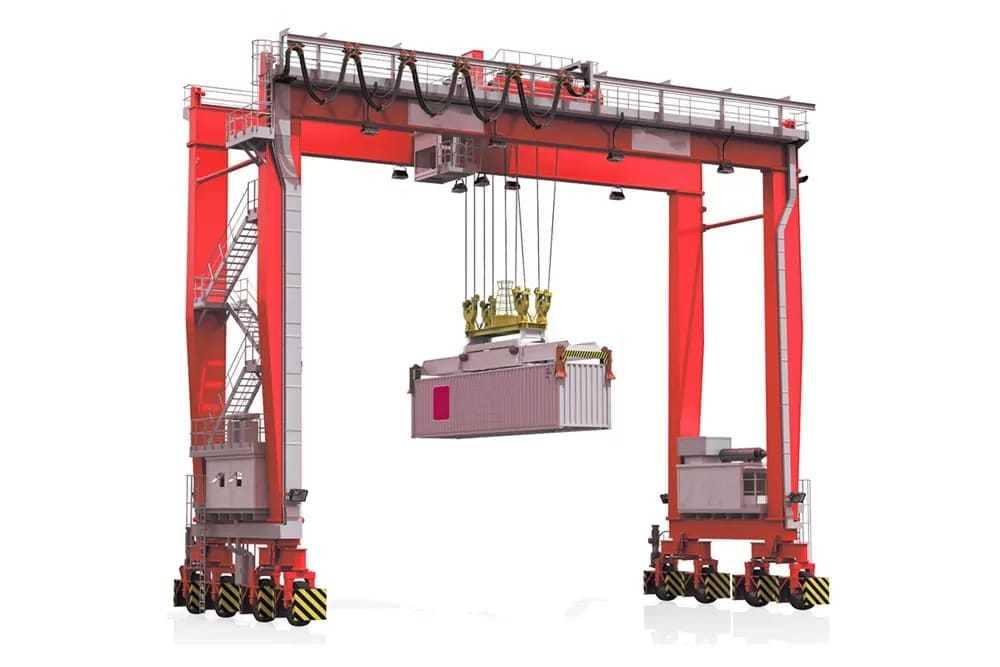
Recommended Model: A 40-100-tonne rail-travelling container gantry crane, or RTG for short.
Core Configuration: It's got a dual-hook spreader, anti-sway system, GPS positioning and wind anchor device.
Henan Mining Case Study: A port in Southeast Asia used our 60-ton gantry crane and managed to get through 30 containers an hour, even when it was dealing with Category 12 typhoons. That's a 40% improvement on the old equipment.
2. Steel & Metallurgy Industry: Gantry cranes that can handle high temperatures
What you need: It can resist high temperatures, is dustproof and can be positioned very accurately.
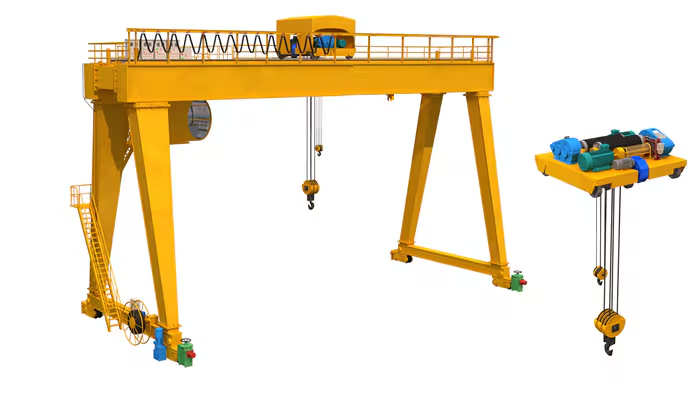
Recommended Model: It's a 20-200 ton double-girder gantry crane (MG Series).
Core Configuration: Heat-resistant motors (180°C minimum), dustproof electrical systems, C-hooks specially designed for coil handling.
Here are some examples of how to use it: Moving coils, ladles and structural components around. Henan Mining's gantry crane for Tangshan Steel Plant worked non-stop for three years, 12 hours a day, with no failures.
3. Logistics Warehouses: Flexible Gantry Cranes
What you need to know: It saves space, is easy to use and can handle loads of all kinds.
Recommended Model: We've got a 1-10 ton wheeled gantry crane (compact).
Here are the main features: It's foldable (so you can save 50% on storage space), battery-powered (no external power needed) and adjustable span.
Application Scenario: Loading and unloading pallets, small containers and packaged goods. After getting a 5-ton gantry crane, a logistics park in North China went from handling 800 tons of stuff a day to 1,500 tons.
4. Chemical Industry: Explosion-Proof & Corrosion-Resistant Gantry CranesRequirements: It's explosion-proof, corrosion-resistant and safety compliant.
Recommended Model: We've got a 5-50 ton explosion-proof gantry crane (Ex d IIB T4).
Core Configuration: It's got a stainless steel structure, explosion-proof motors and controllers, and a gas monitoring system.
Application Scenario: Moving chemical drums, reactors and corrosive materials. Our gantry crane, which we supplied to an Indonesian chemical plant, has ATEX certification and has had zero safety incidents in the last two years.
5. Construction & Infrastructure: Here's what you need to know about crawler gantry cranes: It can handle rough ground and moving heavy stuff around.
Recommended Model: We've got a 50-300 ton crawler gantry crane.
Core Configuration: It's got a big contact area, hydraulic levelling system and long boom.
Application Scenarios: We've got experience of lifting precast beams, bridge modules and construction machinery. A 150-tonne gantry crane was used on a river-spanning bridge project, and it shaved 20% off the construction time.
6. Grain & Oil Processing: Here's what you need to know about our sanitary-grade gantry cranes: It's got a hygienic design, won't rust, and is easy to use.
Recommended Model: We've got a 5-20 tonne stainless steel gantry crane.
Core Configuration: It's made from food-grade stainless steel (304/316), it's got a sealed transmission (no oil), and the hoist speed control is flexible.
Here are some examples of how to use it: Moving things like grain, flour, and packaged food around. A Shandong grain warehouse, for example, cut material loss from 3% to 0.2% after adopting this crane.
Step 4: Common Selection Pitfalls and Solutions1. Price is more important than specifications
Pitfall: Picking the cheapest standard model without thinking about any special requirements (like using it on the coast without it rusting).
The result is: A coastal warehouse cost $80,000 to maintain due to equipment corrosion.
Solution: Can you list three core requirements for this project (e.g. explosion-proof + 30-ton lifting capacity) and rank them according to importance, above any price considerations?
2. Big mistake: Not checking the ground's strength before putting up rail-mounted gantry cranes.
The result is: The equipment keeps jamming because the track is subsiding.
Solution: Do third-party foundation testing and use reinforced concrete if needed.
3. One thing we're doing wrong is not paying enough attention to after-sales support and spare parts. Going for lesser-known brands can save you some money.
The result is: They lost $500,000 in downtime because of three-month delays in getting some parts from overseas.
Solution: Some manufacturers have global service networks (like Henan Mining Machinery, which has 10 overseas service centres and 428 domestic locations, so they can respond within 48 hours).
4. Not thinking about how much space you'll need in future
Mistake: Picking equipment based only on what you need right now.
The result is: You'll need to get some more stuff if you're making more stuff.
Solution: Just make sure you keep 30% of the capacity free, and design the span and lifting height based on the site plans for the future.
So, let's talk about step five, and why you should go for Henan Mining Gantry Cranes.
As a National Champion Enterprise in manufacturing, Henan Mining delivers three core advantages to global clients:
Full Range Coverage: We've got 5-500 ton gantry cranes, including rail-mounted, wheeled, explosion-proof and intelligent models, to meet all your industry needs.
Global Certifications: It's got the CE, ATEX, IECEx and ISO 9001 certifications to make sure it meets international standards (like those in the EU, Southeast Asia and the Middle East).
One-Stop Service: We offer free on-site surveys, custom designs, installation and commissioning, operator training, and a 3-year warranty and lifetime maintenance. Gantry cranes last for 15 years (50% longer than the industry average).
So, to sum things up: Pick the Right Gantry Crane to Boost Efficiency and Safety
Choosing a gantry crane means having a good look at the load capacity, the environment it'll be working in, how hard the workload is and the industry-specific requirements. If you follow these steps – working out what you need, understanding the parameters, matching industry scenarios and avoiding common pitfalls – you can identify the most cost-effective solution.
Whatever kind of warehouse gantry crane you need, whether it's compact or large-scale, the expert team at Henan Mining is here to help.
Global Hotline: Give us a call on +86 18836207779 or drop us an email info@cranehenanmine.com.
When it comes to safer, more efficient and reliable material handling, you can trust Crane Henan Mine.